.svg)
SIGN UP FOR JUICEBOX (IT’S FREE!)

Who are you looking for?
Thank you! Your submission has been received!
Oops! Something went wrong while submitting the form.

Talent engineering is a relatively new way of thinking that doesn’t come with a blueprint. Companies aware of its merits need no convincing they should commit to talent engineering, but they don’t know when is the best time to go all-in.
For many, that moment presents itself when hiring systems are stretched to breaking point. Organizations eventually hit a coordination ceiling when their existing systems can’t keep pace, and they need a more streamlined approach.
Not every team reaches its coordination ceiling at the same moment. But there are four common signals that suggest your current approach is running out of road.
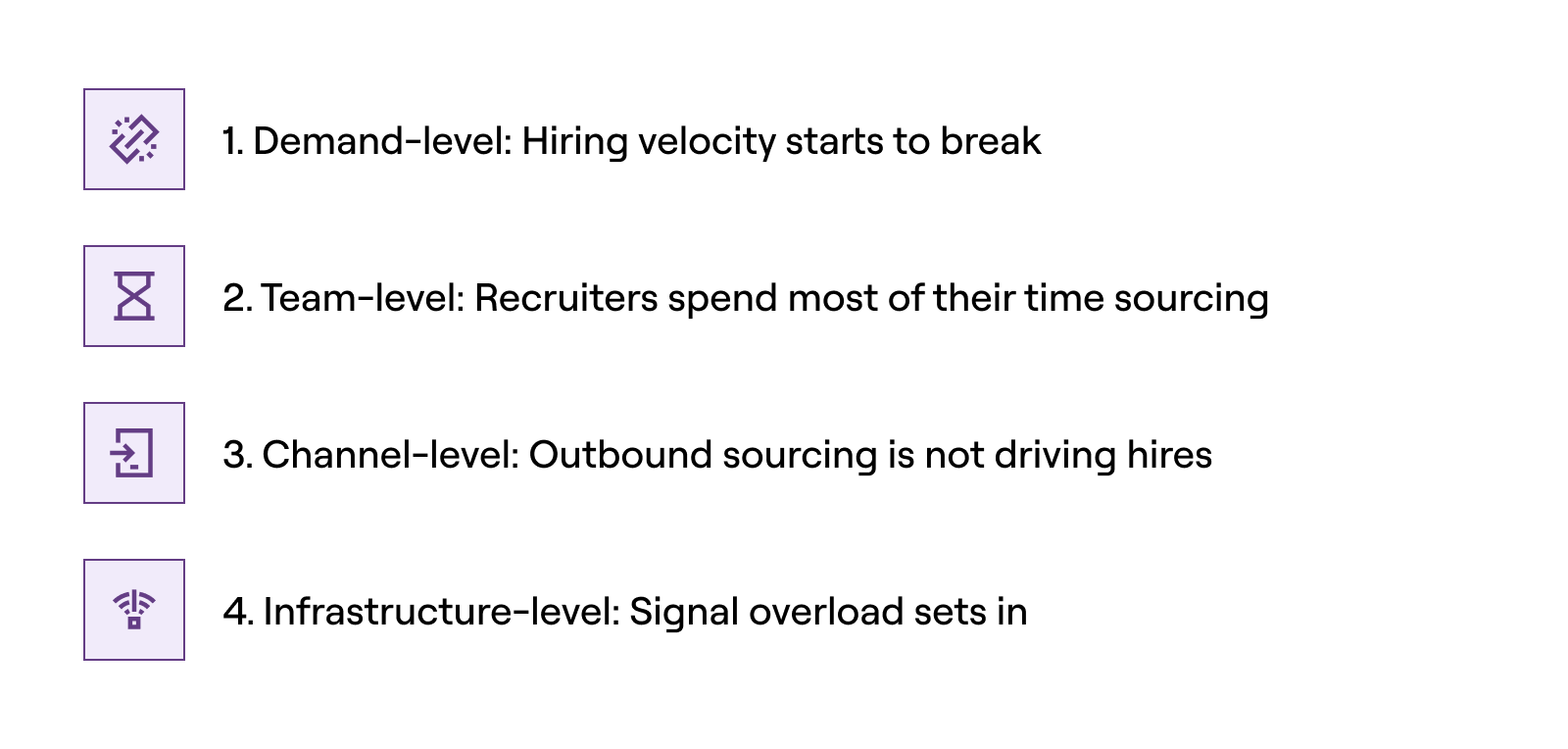
When the number of open roles grows faster than the team’s ability to source them, manual recruiting starts to crack. At that point, the answer isn’t more effort, but a system that can scale with demand.
When sourcing consumes the bulk of a recruiter’s day, they have less time for the human work that actually moves hiring forward: building relationships, assessing nuance, and closing candidates.
Identifying, prioritizing, and contacting talent takes enormous time, and without the right infrastructure, outreach becomes fragmented and inconsistent.
There is no shortage of data, signals, or tools, but without the infrastructure to connect them, teams struggle to act consistently. Sometimes the issue is no system at all; other times it is too many disconnected tools competing for attention. Either way, execution breaks down.
But what kind of costs are involved in committing to a talent engineering approach? In a climate where CFOs are scrutinizing every budget line, the ROI case needs to be clear.
The good news is that adopting a talent engineering mindset isn't necessarily a new budget line. For many teams, it starts with training existing recruiters to think in systems, and conducting an honest audit of what they already have.
Most recruiting functions are running more tools than they need, with overlapping functionality spread across sourcing platforms, ATS systems, and outreach tools. A leaner stack is often possible: a sourcing platform like Juicebox handles candidate discovery and outreach in one place, which means a separate email sequencing tool may no longer be necessary. Consolidating down to a sourcing platform and an ATS can reduce spend before a single new tool is added.
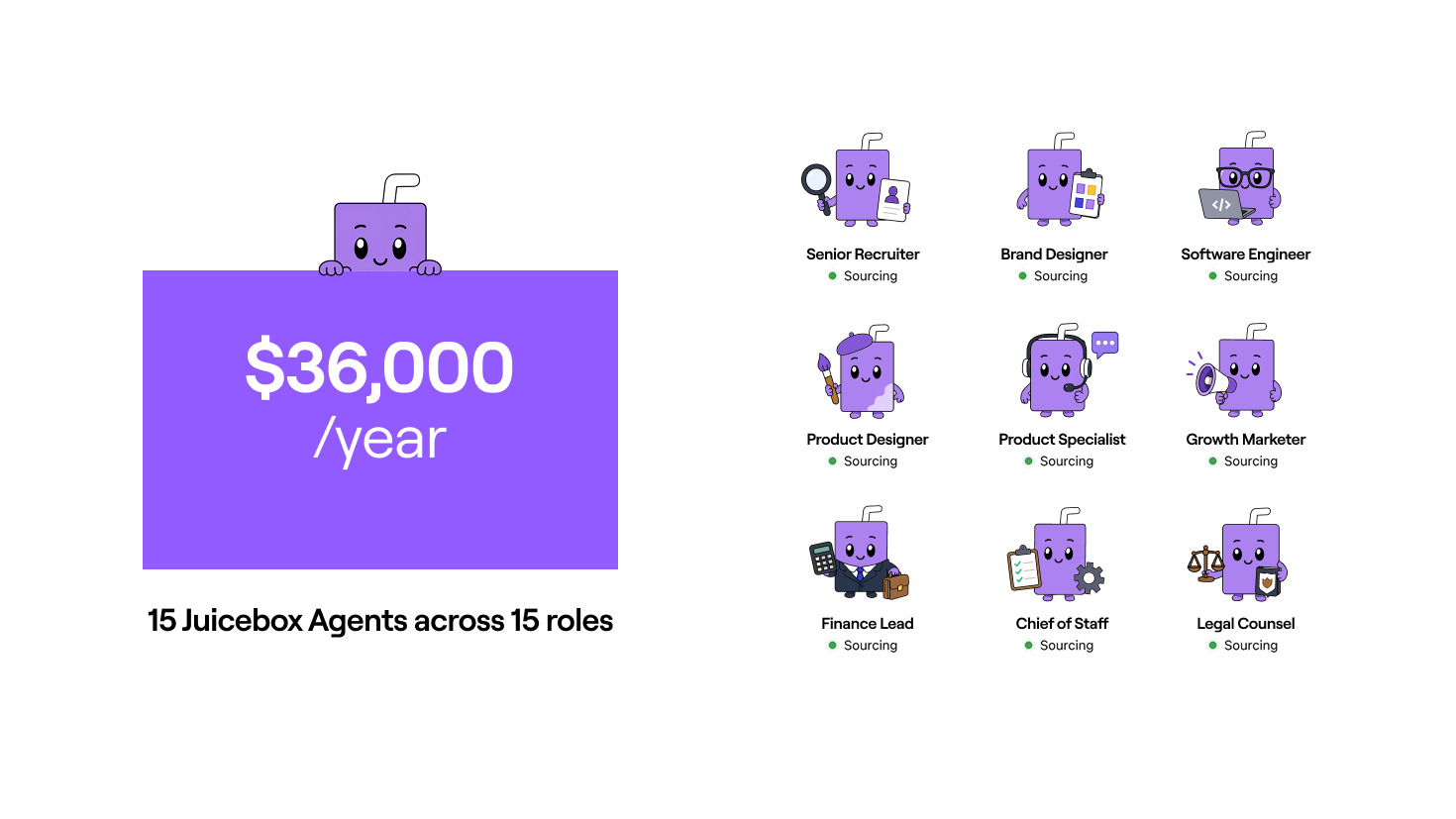
Purpose-built tooling is increasingly affordable: a single Juicebox agent on average covers one role a month and costs just $199 a month, and one recruiter can manage multiple agents simultaneously. A team running 15 agents can cover 180 roles per year for only $36,000 in annual tooling speed to power its talent engineering approach.
The real return on your overall investment is reclaiming recruiter capacity, which can be redirected into relationship-building and candidate closing that no AI agent can replicate.
The tipping point into a talent engineering mindset doesn’t always announce itself. Instead, teams often explain away the signals and default to adding headcount over building systems.
But there’s rarely a good reason to delay investing in talent engineering. Even a single person owning the recruiting infrastructure is enough to start building something that works. The one exception is a company that hasn't yet figured out its hiring process. Introducing AI and automation into a system that isn't working accelerates the problem rather than fixes it. Get the process right first, then build the infrastructure around it.
For everyone else, the shift from manual, human-led hiring to an AI-powered talent engineering system is worth making sooner rather than later. The companies that understand this will design a hiring model that gets more efficient over time.
Run your first search for free. Find and engage top talent across 800M+ profiles. Trusted by 4,000+ customers.