.svg)
SIGN UP FOR JUICEBOX (IT’S FREE!)

Who are you looking for?
Thank you! Your submission has been received!
Oops! Something went wrong while submitting the form.

Talent engineering is still an emerging way of thinking, and organizations that are actively developing or considering it don't yet have a clear picture of what it looks like day to day. The concept makes intuitive sense by treating recruiting as a systems problem and building infrastructure that scales. But moving from philosophy to practice raises practical questions.
Where do you start? What needs to change? And how do you build something that works without tearing apart your existing approach?
Talent engineering sits at the intersection of recruiting expertise and systems thinking, and understanding how those two things work together is key to putting the philosophy into practice.
Recruiters are already doing half the work. They define what strong candidates look like, provide feedback on quality, and make judgment calls that move hiring forward. The shift that talent engineering requires is connecting this expertise to systems that act on it at scale. This requires training your existing team to reconsider their workflows as systems thinkers.
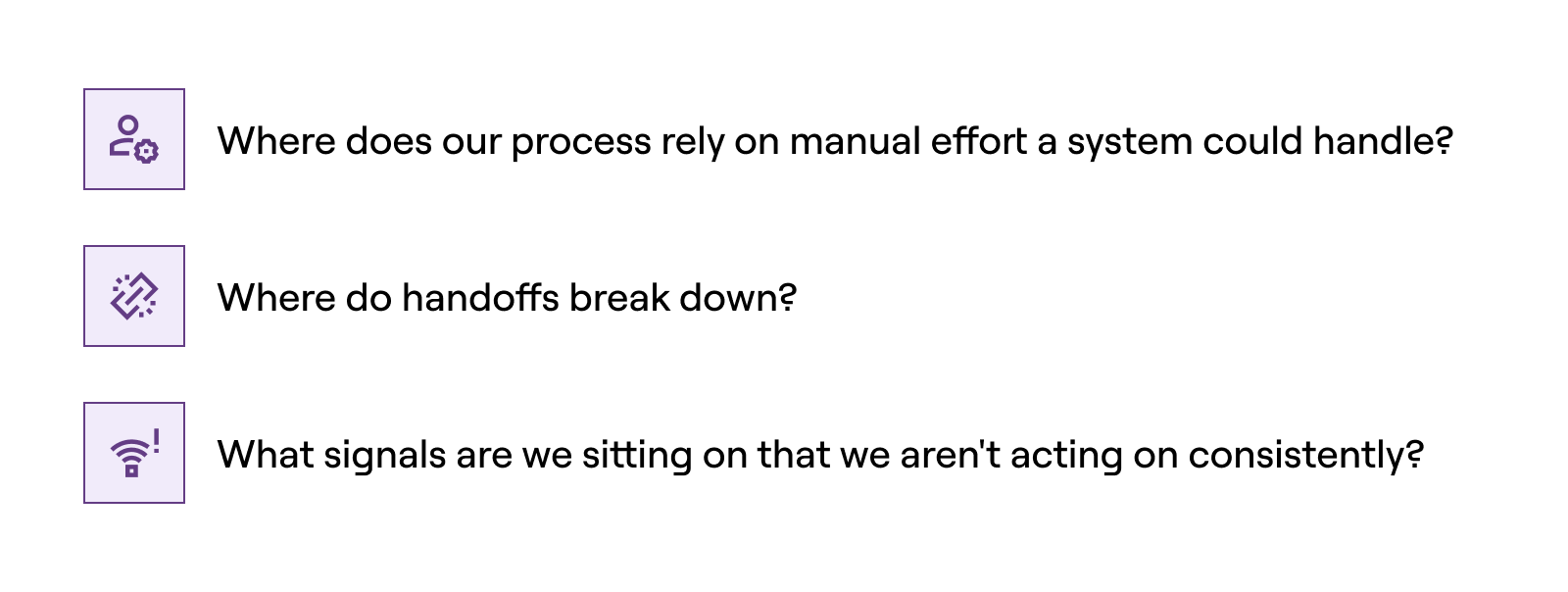
The following questions are the first step toward building something better.
Before adding anything new, it's worth taking an honest look at what your recruiting function already has. Tech stacks are often built up organically over time rather than designed intentionally, and most include more tools than they need. Overlapping functionality is spread across sourcing platforms, ATS systems, and outreach tools.
To identify redundancy, map your existing tools against your funnel stages: candidate discovery, outreach, application tracking, and scheduling. A sourcing platform like Juicebox that handles outreach and CRM, for example, may make a standalone email sequencing or CRM tool unnecessary. In many cases, consolidating down to a sourcing platform and an ATS is enough to cover the full funnel, reducing spend before adding a single new tool.
The overarching goal is to make sure every tool earns its place, and that the tools you keep are connected well enough to function as a system rather than a collection of separate products.
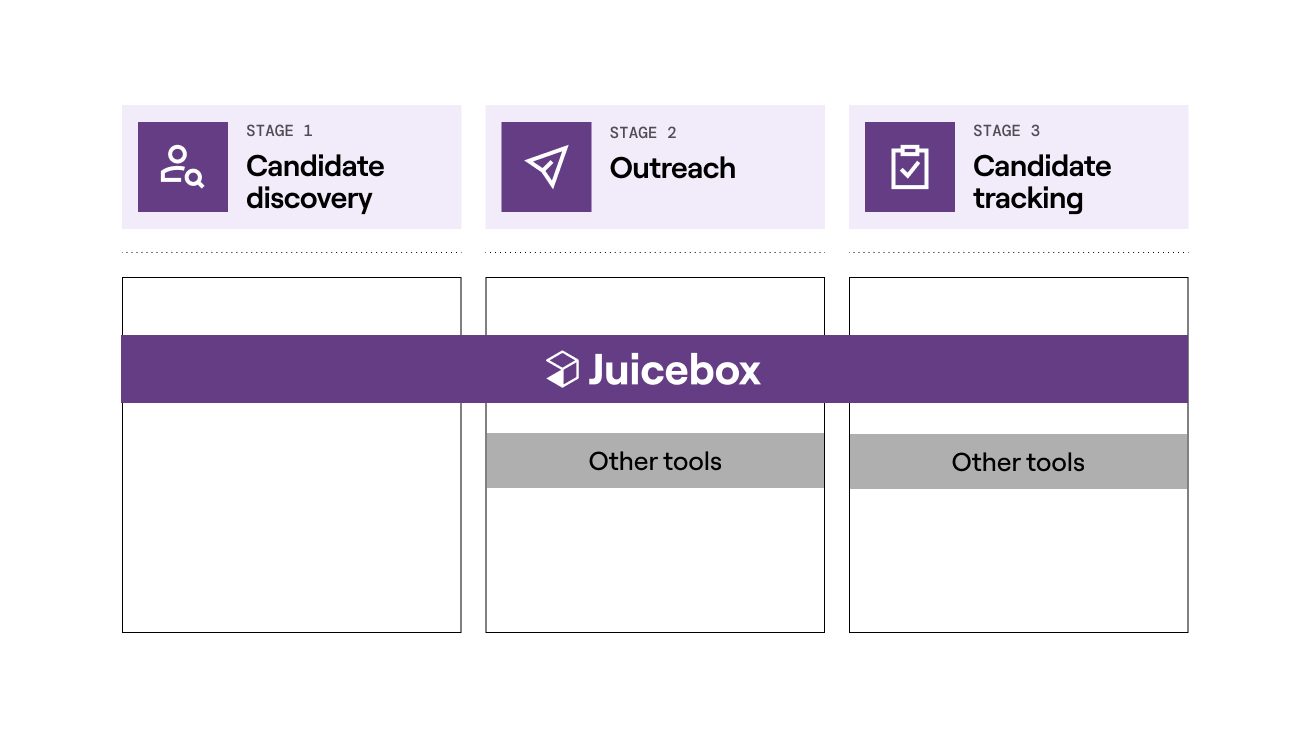
Once you have a clear picture of your stack, the focus shifts to connectivity. A talent engineering approach requires every tool in your stack to work together. Data needs to flow between them without manual intervention at every step.
A practical starting point is integrating your sourcing platform with your ATS. Candidates discovered through sourcing should move cleanly into your ATS without duplication or lost context. From there, outreach and scheduling tools slot into the workflow as supporting layers rather than standalone processes.
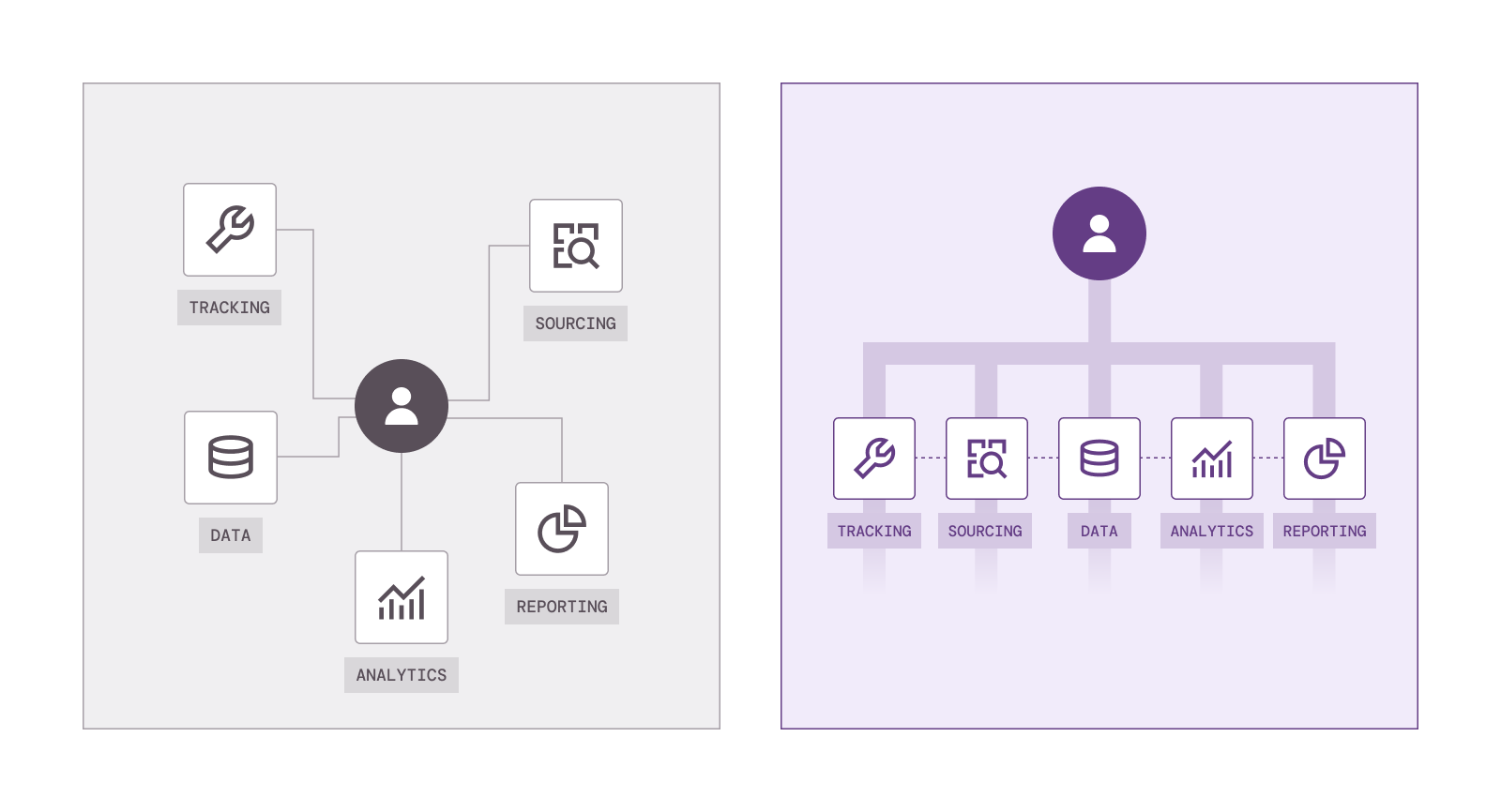
This is where platforms like Juicebox act as connective tissue. Beyond sourcing new candidates, Juicebox can rediscover candidates already sitting in your ATS or imported from other platforms, meaning your existing data becomes part of the system rather than a separate archive you rarely use.
Although the talent engineering mindset is still finding its footing at most companies, some have already discovered that the work exists. And they’ve responded accordingly.
After closing a $42m Series A, Starbridge needed to grow its team fast, across product, engineering, and sales. Instead of viewing this as a conventional recruiting challenge, COO Jordan Kindler treated it as a systems problem, and set up a hiring infrastructure that operated with the same efficiency as the rest of Starbridge's operations.
Each open role was supported by dedicated Juicebox agents tasked to a specific candidate persona. Clay handled company enrichment upstream, feeding scored lists directly into Juicebox as sourcing constraints; Ashby managed candidates deeper in the funnel, with its integration preventing double outreach across tools.
The result was a system that ran continuously, with Kindler and his Head of Talent approving profiles rather than sourcing them manually.
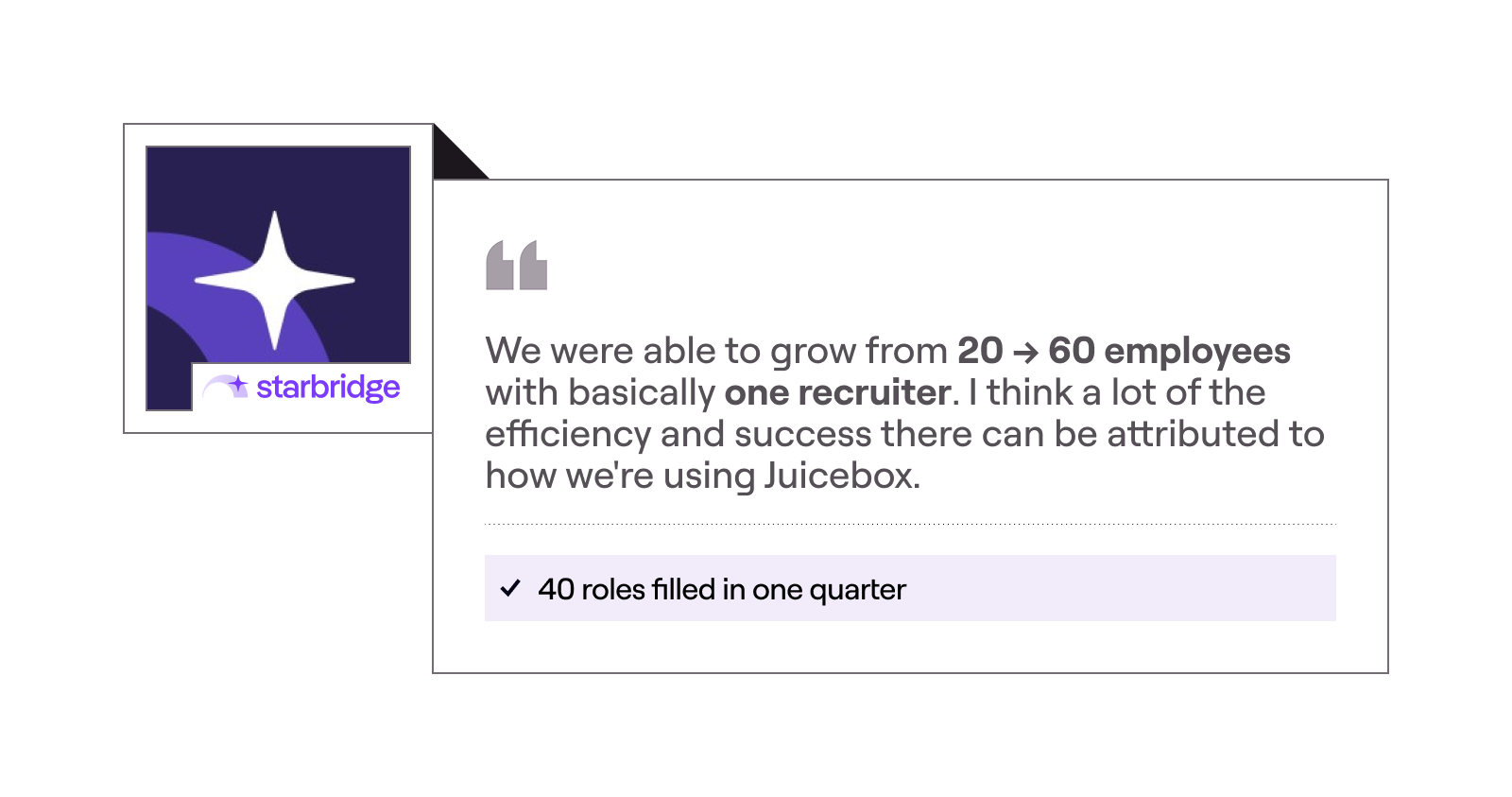
Starbridge grew from 20 to 60 employees in a single quarter. Conventional benchmarks would suggest this pace of hiring requires six or seven full-time recruiters. Starbridge did it with one and a half, because they had built a system that most companies are still trying to define.
Run your first search for free. Find and engage top talent across 800M+ profiles. Trusted by 4,000+ customers.